

GAPS IN THE INTERNATIONAL LEGAL FRAMEWORK — IMPLICATIONS ON MARITIME SECURITY
Captain Masudul Karim — Bangladesh Navy — Pen Name: Ibn Battuta — IONS Essay Competition 2018, 2nd Prize
Introduction
The oceans and the seas have traditionally been recognized as one of the earth’s vital resources. These vast geographical extents are storehouses of unlimited living and non-living resources, familiar mediums for conveying trade and commerce as well as precious sources of recreation for mankind. Whilst there are tremendous prospects of Blue Economy , maritime security is the key element of the sea based economy including marine trade and commerce. It entails two basic determinants i.e. peaceful use of the sea and protection from danger. Maritime security serves as a crucial enabler for the safe and secure use of the oceans and the seas. Strong maritime security means a successful and sustainable economic development, and accordingly, the concept of maritime security is continue to gain its prominence for ever increasing and diverse use of the oceans and the seas.
Marine transportation is the mainstay of international trade and commerce. Shipping accounts for the transport of 90% of the world’s international traded goods. The oceans and the seas are also traditionally linked to human life owing to fishing. Fisheries today provide about 16% of the total world's protein with higher percentages occurring in developing nations . The oceans and the seas are also mined for minerals like salt, sand, gravel, manganese, copper, nickel, iron, and cobalt and also drilled for crude oil. Tourism is a growing sector for creation of millions of jobs around the world. It is an economic gain for global finance.
Maritime security is of paramount importance in the face of webs of criminality. There are constant hazards of hijacking, theft of valuable goods and cargo, and hostage taking of ships and their crew for ransom. Trafficking of drugs, weapons, consumer goods, narcotics and humans also have a well-documented impact. Maritime crimes occur within or beyond the geographical limits and are dangerous for the global community. Getting access to, manoeuvring therein and use of the maritime domain today is increasingly being challenged. These underlying situations have induced the world to rightfully choose a number of legal frameworks to scale down the menaces of maritime crimes. However, these legal regimes although comprehensive, seem to have some gaps in the way of implementing maritime security. In this context, this paper
- identifies loop holes of maritime legal regimes
- analyzes maritime security implications resulting from those gaps
- recommends ways forward for addressing those weaknesses.
Identifying Loopholes of International Maritime Legal Regimes
Dispute over Maritime Zones and Jurisdictions
Till to date the United Nations Convention on the Law of the Sea (UNCLOS) is the only convention providing a framework for states’ jurisdiction in maritime spaces. In the Internal waters , the port state has jurisdiction to enforce domestic laws concerning violations of standard practices including those occur within other maritime zones and beyond. In the territorial sea, a coastal state has sovereign jurisdiction all over and the contiguous zone provides jurisdiction for the violations of customs, fiscal, immigration, or sanitary legislation. In the Exclusive Economic Zone (EEZ), the coastal state maintains exclusive sovereignty over exploring, exploiting, and conserving all natural resources. The coastal state can take action to prevent infringement by third parties of its economic assets and may conduct boarding, inspection, arrest and judicial proceedings to ensure compliance of the international laws and regulations. On the High Seas, the freedom of navigation is important for conducting maritime security activities.
Article 87 of the UNCLOS provides that the high seas are open to all states including freedom of navigation and over flight, and such freedoms shall be exercised with due regard to the interests of other states. Here lies the root of crisis between China and the United States (US). China argues that U.S. surveillance flights within her EEZ undermine the international peace and security, and against her interest for which the former has the right to maintain peace, security, and good order. On the contrary, the U.S. views that its activity is legal because she is not involved in hostilities against another state, and therefore, the use of passive systems to collect information is entirely peaceful and lawful. North Korea has also declared a ‘military zone’ extending 50 miles from the territorial waters to defend her interests and sovereignty
Problematic Definition of Piracy and other Weaknesses
Piracy has been a lucrative crime business for many years. The figure below indicates that from 2009 through 2017, the global piracy occurred cylindrically, reaching in peak in 2010 and then again in 2015, and gradually dropping since then. Regional Cooperation Agreement on Combating Piracy and Armed Robbery against Ships in Asia (ReCAAP) reported a 19% increase in number during 2017 (compared with 2016) in its Annual Report of Piracy and Armed Robbery against ships in Asia.

The international law on piracy is set out in articles 100 to 107 and 110 of the UNCLOS. The definition which appears in article 101 of UNCLOS 1982 is
The UNCLOS repeats almost literally articles 14 to 22 of the Geneva Convention on the High Seas of 1958. The piracy definition is problematic as it limits the crime to the ‘high seas’ implying similar acts occurring within the sovereignty of a state excluded from its ambit. The definition fails to include other elements that are evident in modern day piratical seizures, such as the fact that many of piratical occurrences occur within territorial waters and not exclusively on the high seas. Incidents in the Malacca Straits which are not occurring on the high seas or in the EEZ but within the territorial sea of a coastal state, 18and also the case of Somali pirates withdrawing from high seas to territorial waters shall be ceased to be called as pirate vessels according to this definition.

International Maritime Organization (IMO) rectifies the defects of this designation by introducing a separate term ‘armed robbery’ against ships to address piracy-like crimes occurring within the jurisdictional areas of the coastal states. It defines armed robbery in Resolution A.1025 (26) adopted on 2 December 2009 at the 26th Assembly Session as ‘any illegal act of violence or detention or any act of depredation, or threat thereof, other than an act of piracy, committed for private ends and directed against a ship or against persons or property on board such a ship, within a state’s internal waters, archipelagic waters and territorial sea’.
In UNCLOS definition, there is no explanation of the term ‘private ends’ and also elaboration is necessary since piracies may also occur at ‘political ends’. The example being the hijacking of a Portuguese ship Santa Maria on 23 January 1961 when Portuguese and Spanish political rebels seized control of this cruise liner seeking political change in Portugal. This incident testifies that although maritime terrorism and piracy are distinct from each other, a convergence between them is possible as a result of the tactics of vessel seizure/hijacking and demanding payoff. The third loophole is ‘two ship requirements’ which implies that violence in absence of duo shall not be regarded as piracy. This brings about an interpretational problem of a situation where there is an internal seizure of a vessel by the crew or passengers shall not qualify as piracy as it more akin to the crime of mutiny
Article 100 of UNCLOS stipulates the duty to cooperate in the repression of piracy which does not mean an obligation for the signatory states to prosecute or extradite pirates or to provide mutual legal assistance in prosecutions. Moreover, Article 105 does not compel the signatory states but gives a discretionary power to seize pirate vessels, merchandize or arrest pirates beyond its territorial waters.
In Bangladesh, there is no serious incident of piracy like hijacking and demanding ransom but are incidents of petty thefts occurring on board merchant vessels where poor thieves sometimes board those vessels with minor non lethal knives to steal petty items. These incidents happen within the port limits and therefore are not piracy. The stealing incidents on board maritime transports are called petty thefts.
The International Maritime Bureau Piracy Reporting Centre (IMB PRC) follows the definition of ‘piracy’ as laid down in Article 101 of the UNCLOS and ‘armed robbery’ as laid down in IMO Resolution. Although broader, these are not customary international laws and are restricted to compliance by the signatory states only.
The ReCAAP is particularly designed to prevent and suppress piracy and armed robbery in the Straits of Malacca and Singapore. It urges member states to formulate consistent methods to deter piracy. It had very effective outcomes to combat maritime piracy and as a consequence Resolution 1851 advised the states in the West Indian Ocean to conclude a similar agreement in order to deter piracy in the Gulf of Aden. This culminated into the Djibouti Code of Conduct (DCoC).
ReCAAP does not specifically address the issue of prosecuting pirates; only article 13 emphasizes the need for mutual legal assistance. Article 12 advocates a formal procedure to be adopted by the states in order to extradite suspected pirates.
The Djibouti Code of Conduct (DCoC) is a multilateral agreement between the West African and Arab States. Article 4 empowers the participants to seize, investigate, and prosecute pirates or suspected pirates, as well as rescue ships or persons in distress at sea. The significance of the provisions is to include hot pursuit of pirate vessels into the territorial waters of another participating state.
Due to rise of piracy off the coast of Somalia in 2008 , several UN Resolutions were adopted for addressing the crime of maritime piracy in the region. In accordance with Chapter VII of the United Nations Charter, these Resolutions have been designed to provide short-term solutions to piracy provisions of UNCLOS.
These UNSC Resolutions do not currently form part of Customary International Law but are binding upon the United Nations member states since they were passed in terms of Chapter VII of the United Nations Charter. These Resolutions are directed towards off the coast of Somalia only. For instance, Resolution 1816 encourages member states to cooperate with Somalia’s Transitional Federal Government (TFG) to combat piracy in the region. The member states are granted power to intervene as well as capture suspected pirates in Somalia’s territorial waters for a period of six months. This is an important breakthrough because the international law so far did not grant permission to enter into others territorial zones. The period of six months was subsequently extended for a year under Resolutions 1846 and 1851.
Resolution 1897 encourages signatories to perform their duties under Suppression of Unlawful Act (SUA) and UNCLOS to create criminal offences, establish jurisdiction, and accept delivery of persons responsible for or suspected of seizing or exercising control over a ship. This Resolution also encourages the member states to work together in deterring piracy in the region of Somalia. Resolutions 1950 and 2015 express the urgency for members to update their domestic legislation to criminalize the offence of piracy.
Shortcomings of Laws Governing Maritime Terrorism
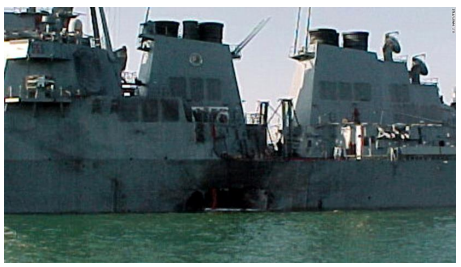
As for terrorism, although maritime domains are viewed as less vulnerable, terrorist attacks are not unprecedented. The incident of bombing of the Philippine Ferry Ozamiz in February 2000 killed 44 people while more than 100 ferry passengers were wounded. Another major incident was the suicide-boat attack on the US warship Cole in October 2000 in the Yemeni port of Aden which also raised concerns about terrorism. Limburg, a 299,000-ton oil tanker also faced a similar attack where a terrorist boat crashed her at Mina Al-Dabah, Yemen on 13 October 2002.
The SUA convention is a convention to address matters of terrorism. However, there are certain provisions within this treaty that address matters relating to piracy for which UNCLOS was deficient, such as expanding the definition of piracy. This convention attempts to define the offenses related to violence at sea.
The 2005 Protocol to the convention provides circumstances where a person unlawfully and intentionally commits an offence within the meaning of the SUA. Additionally, Article 8 of the 2005 Protocol stipulates procedures for requesting authorization to board and search a suspected pirate vessel that bears the flag of another state. In this case, the authorization and cooperation of the flag state is required before such boarding can take place. However, the safeguards for the state party include not endangering the safety of life at sea; ensuring that all persons on board are treated in a manner which preserves human dignity and in keeping with human rights law; taking due account of safety and security of the ship and its cargo; ensuring that measures taken are environmentally sound; and taking reasonable efforts to avoid a ship being unduly detained or delayed.
SUA is not a customary international law and its implementation is only binding upon its signatory states. According to this convention a state has only obligation to surrender an alleged offender to another state having criminal jurisdiction or, alternatively, may prosecute the offender itself. According to SUA convention, signatory states are required to enact domestic legal laws to counter piracy at sea. It also implies that if a capturing state is unable to establish jurisdiction over the matter, she may extradite the accused to a state that can establish and exercise the necessary jurisdiction over the matter.
Proliferation Security Initiatives (PSI) is a controversial U.S.-led multilateral initiative which violates the provision of UNCLOS with regard to articles 17 and 19, article 33, articles 38 and 39 and article 88. Countries like Iran, North Korea, India, Malaysia and Indonesia have duly opposed the initiative.
The International Ship and Port Facility Security (ISPS) code is a standard framework to evaluate risks permitting governments to respond to changing threat levels to the ships and port facilities. This code requires the ships to furnish with the information of their security levels before entering ports. The main weakness of the ISPS code lies in the control measures applicable against non-compliant vessels and are limited to inspecting, delaying or detaining the ship; imposing restrictions on its operation in ports, or lesser administrative and corrective measures.
The Safety of Life at Sea (SOLAS) convention was developed to increase safety aboard ocean-going vessels. Its main purpose is to establish minimum standards for the construction, equipment and operation of ships compatible with their safety. In relation to private security, the main legal problem with SOLAS is whether employing armed personnel shall deprive the Master of his overall responsibility to control actions aboard as required by SOLAS.
Inadequacy of Laws against Illicit Traffic in Narcotic Drugs and Psychotropic Substances
The huge global demand for illegal drugs is the fundamental driving force behind the illicit trade. The global drug trade has been valued by the United Nations Office on Drugs and Crime (UNODC) at $320 billion per year, comparable to the Gross National Product (GNP) of Sweden at $358 billion .
Article 108 of UNCLOS imposes condition that all states shall cooperate in the suppression of illicit traffic in narcotic drugs and psychotropic substances on the high seas. This clause seeks cooperation among the states but does not make it mandatory for them to deal efficiently with the illicit traffic in narcotic drugs or psychotropic substances.
The United Nations Convention against Transnational Organized Crime (CTOC) aims to combat organized crime through global cooperation but there is no obligation. It requires states to implement domestic measures for criminalization of various organized crimes including illicit trafficking in arms, drugs and persons, law enforcement cooperation, adoption of frameworks for legal assistance and provision for technical assistance and training. Its Protocols make similar provision in respect of human trafficking, smuggling of migrants at sea, and the illicit manufacture and traffic of firearms.
The 1961 Single Convention on Narcotic Drugs as amended by the ‘1972 Protocol Amending the Single Convention on Narcotic Drugs’ prescribes only minimum controls and standards for states to apply at the national level. On the other hand, the 1988 United Nations Convention against Illicit Trafficking in Narcotic Drugs and Psychotropic Substances deals directly with state’s legislative and maritime law enforcement cooperation to combat illicit drug trafficking. On the international plane, the authoritative instrument for combating human trafficking is the convention against Transnational Organized Crime and its Protocol to prevent, suppress and punish trafficking persons, specially women and children.
Conservation of Marine Resources
Article 117 of UNCLOS stipulates duties of the states in the conservation of living resources. Article 118 describes that states shall cooperate in the conservation and management of living resources in the areas of the high seas. Article 119 of UNCLOS allows measures for the states to maintain or restore populations of harvested species at levels which can produce the maximum sustainable yield. These conventions do not specifically refer to adopting necessary measures based on which the states shall enter into negotiations for the conservation of the living resources.
Marine Pollution
Apart from UNCLOS, 1972 Prevention of Marine Pollution by Dumping of Wastes and Other Matter (London Convention)57 is an international treaty that created a global system to protect the marine environment from pollution caused by ocean dumping. This convention ensures that materials allowed for ocean disposal do not pose a danger to human health or the environment and that there are not more feasible alternatives for their reuse or disposal.
Maritime Security Implications
In the face of dispute over maritime zones arising from unclear explanation of the laws, it is likely to give rise to tensions where enforcement of maritime security is concerned. The definition of a pirate ship or aircraft compounds the interpretational problem for law enforcement because of its reference to Article 101 of UNCLOS. The law enforcement liability is in question by ‘two ship requirement’ in case if any vessel is pirated by a group motivated by political ideology and if the incident is committed by the crew or passenger of the same ship. Article 103 adds the burden of determining whether the suspect was actually intending to commit piracy causing ground problem of classifying a suspect from other vessels.
Another maritime security implication is that piracy like offences occurring in other maritime zones well within the coastal states jurisdiction shall not qualify to have similar criminal jurisdiction by the coastal states. Law enforcement is further predicated by the fact that there is no obligation by UNCLOS to enact national legislation calling piracy a punishable offence nor does it compel coastal states to declare acts of piracy beyond territorial sovereignty a crime. There is no compulsion to enact laws in terms of pursuit, seizure and arrest, prosecution and extradition as well as cooperation to deal with the piracy which is again a tactical problem for dealing with piracy.
Although the IMO definition leads to the distinction between ‘piracy’ and ‘armed robbery’ but give rise to maritime security problems as not every state has domestic legislation dealing with armed robbery. Article 106 of UNCLOS states that where the seizure of a ship or aircraft on suspicion of piracy has been effected without ‘adequate grounds’ the state making the seizure shall be liable to any loss or damage caused by such seizure. There is no clear indication of what constitutes ‘reasonable grounds’ which is necessary for the law enforcers in current situations where thousands of small craft are operating at sea and whose intentions are not known. This can be exemplified from the incident of Italian Marines based on the tanker Enrica Rexie allegedly firing on an Indian fishing trawler off Kerala in Feb 2012 killing two of its eleven crew. The Marines allegedly mistook the fishing vessel as a pirate vessel and the incident sparked a diplomatic row between India and Italy. Furthermore, the law enforcement at sea sometimes requires use of proportionate force which is likely to cause some damage or casualty to the suspect. Thus the provision of this article may discourage the law enforcers to initiate action against the potential crimes.
Although it is not common, some owners of merchant vessels employ private security guards to reduce the risk of being attacked by pirates. In this case, Article 107 which provides basis for seizure of any vessel on account of piracy is problematic as it does not mention about arrest by private or commercial vessels within its ambit. Hence, Privately Contracted Armed Security Personnel (PCASP) does not have any legal basis to act on selfdefence.
Other security implication of UNCLOS is that the convention requires a joint effort in eradicating piracy on the high seas. Under the existing rules, a warship may not intervene against acts of violence on board another private ship or persons or property in the coastal waters of another state but may only do so under its humanitarian obligation to render assistance to persons in distress under article 98 of UNCLOS.
Article 110 grants the military vessels ‘Right of Visit’ upon ‘reasonable grounds’ which lead to plethora of the interpretations of what constitutes such grounds. Maritime security implication in this regard leads to the complexity over suspicion of specific illicit activity which shall normally be acted upon through a boarding, but if the suspicions are unfounded and no illegal activity is discovered, the ship visited is entitled to compensation for any loss or damage. Therefore, the decisions made by the commanders may result in substantial repercussions, if proper judgment is not exercised during boarding operations. The article also suggests dispatching a boat which is again risky as the suspect may react with violent protests.
The UNSC Resolutions concerning maritime security are only directed to the regions of Somalia; hence, similar offences occurring in the other regions are still subject to legal impasse. The SUA Protocol lacks an appropriate dispute settlement mechanism specially when the flag states and inspecting states may disagree as to whether the investigation was justified in substance and in form. The provisions of SUA suggest that once a state has established the Article 6 of SUA, the state retains discretionary power to extradite captured offenders for prosecution. Such discretion may lead to unconditional release of pirates or terrorists without punishment.
The particular maritime security implication for SUA Convention is that it does not address modern threats of terrorism to the safety of shipping and persons on board, and also does not deal with appropriate measures, such as boarding and searching a ship to interrupt the an offence under the convention. In this convention, the use of force is to be avoided except when necessary to ensure the safety of officials and persons on board. There are doubts as to whether this view is actually tenable.
As for other international maritime legal regimes concerning illicit trafficking of drugs, consumer goods, arms and human trafficking as well as Illegal, Unregulated or Unreported (IUU) fishing and marine pollution, the major security implications are evident in the loopholes of suspecting a criminal vessel on the basis of reasonable ground. In most cases, there is no obligation for the states to compulsorily deal with these crimes and also cooperation among the states is not mandatory.
Ways Forward — Suggested Guideline
It may be concluded that the provisions and contents of UNCLOS dealing with the maritime zones are ambiguous, contentious and often leads to interpretational gaps. Thus, it may be appropriate to revisit and update the related provisions of the convention to establish reasonable jurisdictional rights and also to bring it in line with recent trends of the crime.
The definition of piracy should be changed and expanded to include ‘political ends’; also ‘two ship requirements’ should be eliminated. Inclusion of other definitions like ‘armed robbery’ and ‘petty theft’ would allow states to take legal actions against piracy like incidents committed anywhere at sea. Use of force by PCASP could be permitted stating conditions which are meant by self-defence.
The convention should categorically stipulate the explicit obligations for all states a collaborative approach to address all sorts of crime occurring at sea. Piracy, terrorism and the illicit trafficking of narcotics, drugs, humans, and weapons comprise the main varieties of transnational crimes which should be extensively explained and addressed in the convention. The right for the warships to ‘approach and visit’ on the high seas and other maritime zones should clearly state what constitute ‘reasonable grounds’ and ‘founded reasons’ and what constitute a vessel ‘suspect’ for pirate or criminal platform. The same is applicable for conservation of marine resources and prevention of marine pollution. As terrorism contains an element of unpredictability, individuals or groups operating ‘off the radar’ can be remarkably difficult to identify prior to an attack. Hence, potential situations with exhaustive details could be added in the convention.
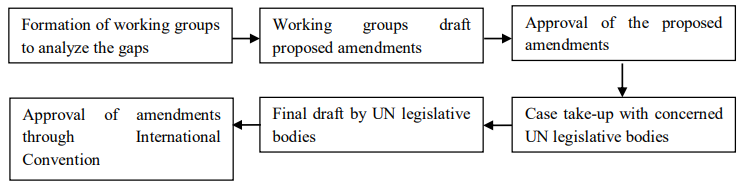
The Indian Ocean Rim Association (IORA) or preferably the Indian Ocean Naval Symposium, commonly known as IONS could act as the lead agency to propose amendments to the existing maritime legal regimes. A number of working groups could be formed according to the requirement to investigate the loopholes of the existing systems as stated above following which a set of recommendations could be drafted and brought forward for the consensus of the symposium. Having so initiated, the next step would be to take up the case with the concerned legislative bodies of the UN recommending necessity for organizing another international convention to enact those changes. If agreed and convinced, the latter is likely to put up a final draft of the proposed amendments for approval during any future convention.
Conclusion
Maritime security is a colossal task and its execution and success depends on a sound and established legal framework. However, there are flaws in the international legal regimes regarding maritime zones which make it difficult to ensure maritime security owing to gaps in its interpretation and legal rights of the states. UNCLOS too has weakness in defining piracy as it includes the provision for it to take place in the high seas, and also includes ‘private ends’ and ‘two ship requirement’. According to this convention, criminal acts conducted in territorial seas where states enjoy both sovereignty and jurisdiction shall not be categorized as piracy. Among the other weaknesses, failure to place explicit obligation to the states to combat crimes and also inadequacy to define reasonable grounds to call someone a suspect etc are mention worthy. Few other international bodies like IMO, IMB and ReCAAP etc have broadened their definitions of related crime as armed robbery but their compliance obligation is only restricted to the member states only. The problem of prosecution of Somali pirates was although overcome by adopting several International UN Resolutions but are applicable for the signatories only.
The SUA convention aims at combating terrorism but it is not a customary international law and its implementation is only binding upon its signatory states. Other conventions like SOLAS and ISPS code are also meant to improve safety and security at sea but contain some faults in them related to marine security. There are several other legal regimes to combat illicit drug, narcotics, and human and weapon trafficking as well as conservation of marine resources and pollution control but are also deficit in their adequacy in the way of implementation of maritime security.
The definition of piracy should be changed and expanded to include ‘political ends’; also ‘two ship requirements’ should be eliminated. The convention should elaborately stipulate the necessity of a collaborative approach to address all sorts of crime occurring at sea. The right for the warships to visit on the high seas and other maritime zones should clearly state what constitute founded reasons to classify a vessel suspect for piracy or other criminal acts. The same is applicable for conservation of marine resources and prevention of marine pollution. As terrorism is unpredictable, potential situations should be narrated in the convention to call an approaching craft a terrorist’s vessel.
The IORA or IONS could take the lead to address gaps in the international legal regime. Several working groups could be formed to study the loopholes and put up recommendations to enact changes by the appropriate legislative bodies of UN.
(Computer word count — 6816)
Bibliography
Books
- R. Geiß and A. Petrig Piracy and Armed Robbery at Sea, The Legal Framework for Counter-Piracy Operations in Somalia and the Gulf of Aden (2011).
- Robert C. Beckman, Carl Grundy-Warr and Vivian Louis Forbes, 'Acts of piracy in the Malacca and Singapore Straits' (1994).
Journals
- R. Collins and D. Hassan ‘Applications and Shortcomings of the Law of the Sea in Combating Piracy: A South East Asian Perspective’ (2009) Volume 40 Journal of Maritime Law & Commerce 89.
- T. Treves ‘Piracy, Law of the Sea, and Use of Force: Developments off the Coast of Somalia’ Volume 20 No.2 ‘The European Journal of International Law (2009)’.
- J. Kraska and B. Wilson ‘Piracy Repression, Partnering and the Law’ Volume 40, No.1 ‘Journal of Maritime Law & Commerce’(2009).
- Jayant Abhyankar, 'Piracy, Armed Robbery and Terrorism at Sea ' in Graham Gerard Ong-Web (ed), Piracy, Maritime Terrorism and Securing the Malacca Straits.
- V.P. Nanda ‘Maritime Piracy: How Can International Law and Policy Address this Growing Global Menace?’ Volume 39 (No.2) ‘Denver Journal of International Law and Policy (2011)’.
- D. Chang ‘Piracy Laws & The Effective Prosecution of Pirates’ (2010) Volume 33 ‘Boston College International & Comparative Law Review’.
- Pedrozo, Raul. "Is it Time for the United States to Join the Law of the Sea Convention." Journal of Maritime Law and Commerce. Vol. 41, No. 2 (April 2010).
- L. Bento ‘Toward an International Law of Piracy Sui Generis: How the Dual Nature of Maritime Piracy Law Enables Piracy to Flourish’ (2011) Volume 29, issue 2 Berkeley Journal of International Law.
- C. Tiribelli ‘The Time to Update the 1988 Rome Convention for the Suppression of Unlawful Acts Against the Safety of Maritime Navigation’ (2006) Volume 18, Sri Lanka Journal of International Law.
- J. Ashley Roach, 'Enhancing Maritime Security in the Straits of Malacca and Singapore', Journal of International Affairs.
Conventions and Resolutions
- The United Nations Convention on the Law of the Sea (UNCLOS) 1982.
- Geneva Convention on the High Seas 1958.
- International Maritime Bureau Piracy Reporting Centre (IMB PRC).
- The Regional Cooperation Agreement on Combating Piracy and Armed Robbery against Ships in Asia (ReCAAP).
- International Maritime Organization (IMO) resolutions.
- The Djibouti Code of Conduct (DCoC).
- Suppression of Unlawful Act (SUA) convention.
- The United Nations Convention against Transnational Organized Crime (CTOC).
- 1972 Prevention of Maritne Pollution by Dumping of Wastes and other Matter (London Convention).
- Proliferation Security Initiative (PSI).
- Safety of Life at Sea (SOLAS) convention.
- International Ship and Port Security (ISPS) code.
- UN Security Council, Security Council Resolution 1816, 1846, 1850, 1851, 1897, 1918 and 2015.
- The Straddling Fish Stocks Agreement.
- The Indian Ocean Rim Association (IORA).
- The Indian Ocean Naval Symposium (IONS).
Newspaper
- The Daily Star, Bangladesh, April 16, 2013.
