

THE EFFECT OF MODERN MARITIME TECHNOLOGIES ON SECURITY IN THE INDIAN OCEAN
Pen Name: INCARNATE INJUN
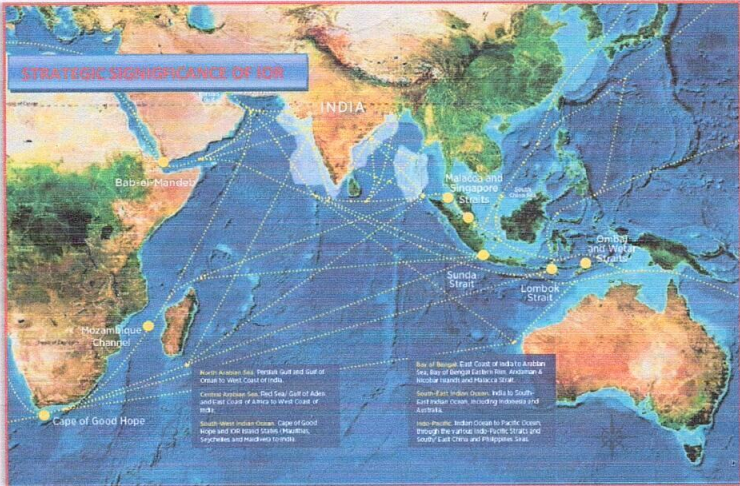
Methodology
This essay is aimed to highlight the emerging trends in the field of science and technology which are potential game changers in the maritime security domain. The essay is bifurcated in four parts - Importance of IOR, Introduction of the emergent Technologies, Effect of these Technologies and their Implications. The flow of thoughts portrayed in the essay is an effort towards harnessing the scientific/ technological developments that will hopefully influence opinions of International maritime powers of IOR (Indian Ocean Region) in a positive way so as to enable them to effectively exploit these emergent technologies towards enhancement of maritime security in the Indian Ocean Region.
Importance of IOR — A Pandora's Box
1. Nothing could be more apt than above words of the eminent philosopher Immanuel Kant. A renowned and distinguished German philosopher of the 18th century, he was one of the earliest exponents of perpetual peace which entailed necessity of universal democracy and international cooperation.
2. The above words/ ideologies find great applications towards achievement of everlasting peace. And nothing could be more fitting time than now for IOR countries to act in togetherness. The countries/ nations which are directly or indirectly affected by the Indian Ocean are living in very extraordinary times. As the third largest water body in the world, and containing vital sea lanes that help feed some of Asia's largest economies, the importance of Indian Ocean is crystal clear. The sea lanes in this ocean are considered to be amongst the most strategically important in the world. More than 80 percent of world's seaborne trade in Oil transits through Indian Ocean choke points, with 40 percent passing through the Strait of Hormuz, 35 percent through the Straits of Malacca and 8 percent through the Bab-el-Mandeb Strait.
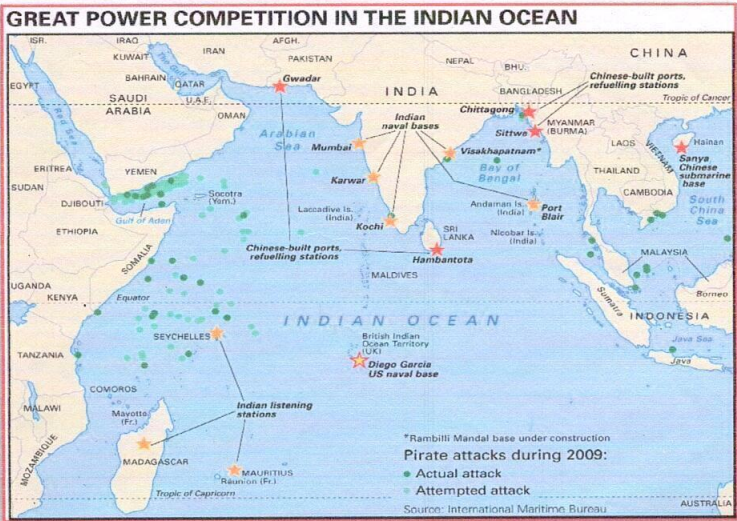
3. But there is more to this lure than just factors of trade and economic development. A lot of the world's potential armed conflicts are located in this region. These waters have been witness to a perennial evolution of strategic developments. The economic rivalry of India and China, potential nuclear confrontation between India and Pakistan, Islamic terrorism, the scourge of piracy off East African Coast and unstable political environment of some Island/ Littoral states of the 1OR are just the tip of the iceberg.
4. Consequently, almost all world powers have deployed substantial military force in this region. To elaborate, the US has its 5th fleet headquartered in Bahrain and the British Indian Ocean Territory (Diego Garcia) acts as a major logistics hub and naval base for her naval operations in this region. The US naval task forces CTF 152 (safeguards oil flow through Persian Gulf) and CTF 150 (counter piracy operations) are examples of the same. France too has maintained its presence with naval bases in Djibouti, Reunion Islands and Abu Dhabi. China has entered into this league with inauguration of its naval base very close to the US naval base Camp Lemonnaire at Djibouti. Further, to confound the situation, China has been busy like a worker bee facilitating infrastructure growth as part of its soft power diplomacy through generous loans, investments in projects etc which has helped in earning international goodwill and influence in the IOR. It would be suitable to say that the IOR is а Pandora's Box with some unexpected results waiting to be unearthed which can be tipped to а favourable scale only if a collective effort and cooperation by IOR countries especially in light of the technological developments is undertaken.
5. The field of science and technology has transformed the farfetched possibilities into reality. A cohesiveness and multilateral cooperation on part of the countries in the IOR is the need of the hour. Having touched upon the importance of IOR, let us now dwell upon the technological aspects of modern maritime technologies which can enable these circumstances. Traditionally, technology has always evolved in exponential scale when compared to the existing operational framework. For the stakeholders, it has always been a daunting challenge to bridge this gap who are directly involved in their respective sub maritime domains. The essay will attempt to provide a path using mutual cooperation using these technologies towards enhancing maritime security. But before we do that, a brief primer on these latest trends is necessary.
Maritime Technologies — Introduction
6. Technologies that could shake the maritime industry have emerged from all angles. The stakeholders directly influenced by IT and age of digitisation will be the first ones to get affected. Some of these in a nutshell can be used for Smart Fleet Management using AI (Artificial Intelligence), Robotics for port logistics, digital currencies (Crypto Currencies like Bitcoins) and deep learning computers.
7. The year of 2017 has been instrumental in terms of multiple computer based technologies which are appreciated to be pivotal in changing the nature of maritime operations in both commercial shipping and maritime military sub domains. These entail high level automated processes and consequently offer immense operational benefits to the shipping industry. At the same time, the naval/ coastguard operations which are focused on security and maintenance of law and order in the maritime domain will also be positively benefited owing to greater transparency being afforded by these emergent technologies. The succeeding paragraphs will cover these new emergent technologies and their implications for the IOR.
Deep Learning

8. What is Deep Learning. The core science behind this technology is to understand the neural network of the human brain so as to improve the machine algorithms, and is also the genesis of AI or Artificial Intelligence as we know it today With the advent of heavy duty computing processors, the IT giants viz Microsoft, Google, Amazon, E Bay, Facebook etc have already latched onto the bandwagon of deep learning (uses deep level of machine learning to garner a better understanding of the trade sectors). This development has picked up pace in the last decade courtesy the boom of heavy duty computing power, the arrival of which was accompanied by a spectrum of powerful features. In other words, this technology has gifted the programmers with two conspicuous features which find a wide spectrum of applications and have been instrumental towards giving birth to offshoot technologies. Details of these two features are appended below.
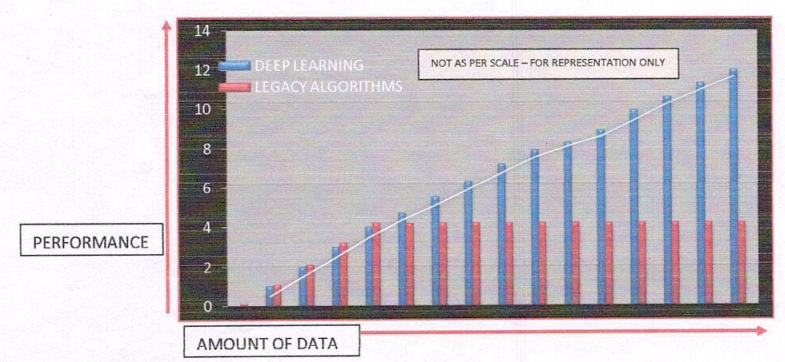
- Scalability. It means that as the designers construct larger neural networks and train them with more and more data, the performance of the machines increase. Now this is different to the older machine learning techniques (task specific algorithms) that stagnate in their performance sooner or later unless a programmer amends the code/ software. Even then, the performance rise will be marginal in view of the rigid software architecture of older machine learning algorithms. The graph below reflects on the performance capabilities of the deep learning technology (scalability). The coming days will witness numerous benefits as this field matures to deal with abundance of data available.
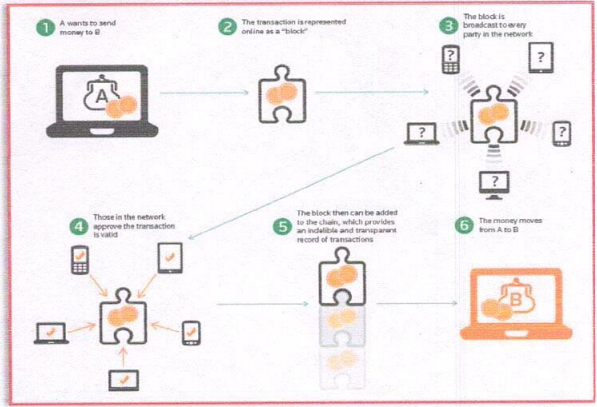
- Feature Learning. Another critical aspect facilitated by this technology is called Feature Learning which enables automatic feature extraction. In other words, it allows system to learn complex functions mapping the input to the output directly from the data, without depending completely on human crafted features.
9. Applications. In the maritime domain, applications based on this technology have already entered a commercially viable phase. The shipping companies have opened up new generation of maritime hubs such as the Thome Group in Singapore which inaugurated one in end 2017 for rapid response to emergencies in their fleet of ships. Similarly, onboard system suppliers viz ABB, Wartsila and Rolls Royce have also followed suit. Deep learning applications for efficient machinery controls, evolution of robotic cargo loading/ unloading are already under development.
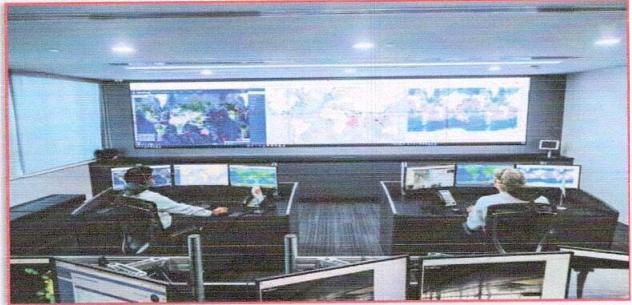
10. Deep Learning — Implications in IOR. The implication of any new technology on the maritime domain has been far and wide. Considering the dynamism of IOR, deep learning has a huge potential in promoting security and safety in IOR as it facilitates rapid responses and faster computing power for a spectrum of solutions. These solutions can be in the field of SAR, Interfacing with Maritime Security Hubs, interoperability between friendly 1OR nations against Piracy, real time update and positional information of piracy incident etc.
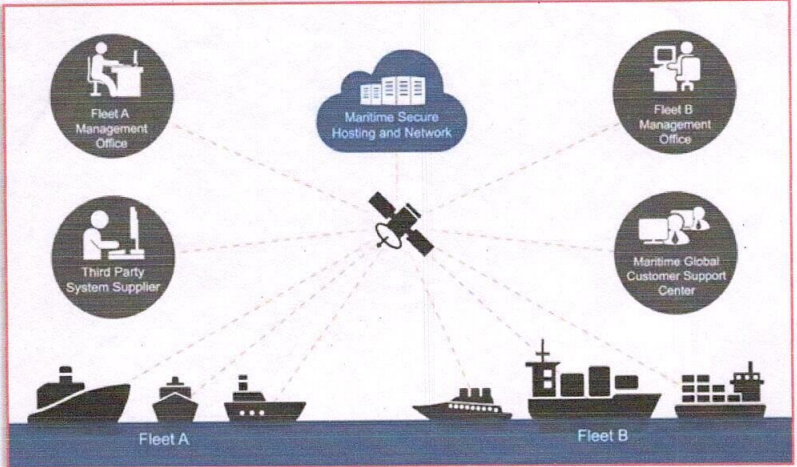
Artificial Intelligence
11. Background. The Deep Learning algorithms have created Artificial Intelligence systems which are solely aimed at intelligent automation. Whilst, the deep learning algorithms would be primarily concerned with problems that have been previously encountered and predicted, the element of uncertainty, unforeseen circumstances, however would be accounted for by Artificial Intelligence. An interesting progress in this regard is the development of autonomous surface vessels which would be capable of navigation without human interaction.
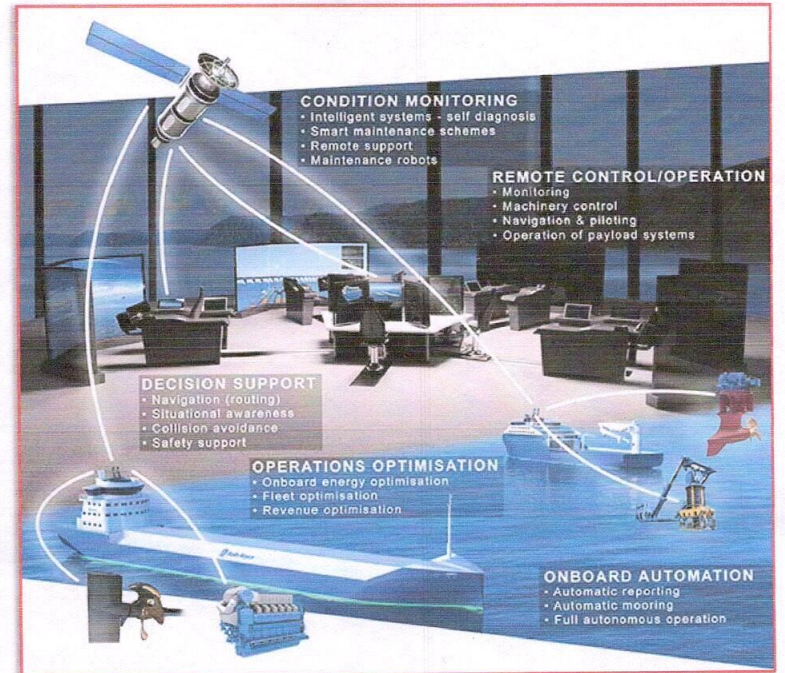
12. Autonomous Vessels. The combination of a deep learning algorithm and artificial intelligence will enable the onboard vessel computer to decide actions/ arrive at solutions to problems and understand the environment/ maritime conditions as a pre requisite for safe and timely delivery of onboard cargo. The year 2017 saw demonstration of remotely controlled vessels. However, in 2019, it is speculated that boundaries of autonomous shipping operations would be further explored by construction of large autonomous vessels. Imagine a ship where the pilot has just departed and the ship is now moving along its track through a series of waypoints. The track was laid out back at port, and has been optimised catering for weather and other contingencies by an operator aided by an AI powered system. These autonomous vessels would be under supervision of ashore operators of the shipping company geographically separated in separate time zones to enable seamless control handing/ taking over. All this is speculated for the year 2019, an interesting year to look forward to indeed.
13. These ships would initially be in the form of a prototype to enable ship-owners to identify which technology to adopt and later on evolve to mass scale productions. This will have its own set of connotations for maritime security, the implications of which have been attempted subsequently in the later part of this essay.
AI Capabilities & Implications in IOR
14. Capabilities and Implications of AI. The possibilities of AI in the maritime domain are limitless. Implications of the same are multi layered at different sub domains. Implications of AI's capabilities in various sub domains under the maritime domain but not limited to are as tabulated below:-
| Sr | Sub Domain | Capability / Features of AI | Implications |
|---|---|---|---|
| (a) | Tele Medicine & Diagnosis | Image Enhancement and Medical Diagnosis | IOR countries can facilitate telemedicine and quick medical diagnosis based on AI's Feature Learning to all littoral regions thereby enabling cohesiveness. Further, this opens up avenues for international cooperation between friendly states. |
| (b) | International Shipping Lanes (ISLs) |
Observe, analyse and track shipping lanes so as to recommend rerouting of fleet of ships post understanding one or more of the following factors:
|
|
| (c) | Maritime War Fighting |
|
|
| (d) | Shipping Logistics | Seamless integration of new shipping logistics and communication technology into existing models. | Eliminates reluctance on part of executives of shipping and logistics industry resulting in enhanced profits and reduced losses. Additionally, the interfacing of these Logistics Hubs of the big shipping companies to the naval/maritime operations centre can be easily undertaken. |
| (e) | Autonomous Vessels |
|
|
Industrial Internet of Things (IIoT) and Blockchain
15. These two technologies are complementary to each other. While one creates seamless integration without human intervention, the other enables a secure and transparent environment for digital transactions. Details of the same are enumerated in succeeding paragraphs.
16. Blockchain Transaction Process. The blockchain process technology will revolutionise supply chain logistics and cargo trade over maritime routes. The proliferation of digital crypto currencies like Bitcoin, Ethereum etc has further catalysed it as one of the methods of procuring products and trading cargo. This has potential to develop from a small scale to a mainstream method of transaction in the maritime and global industry chains. Further, research is already into advanced stages wherein the model of crypto currency is planned to be emulated into shipment and cargo handling processes. Not only do these processes are secure means of cyber maritime transactions, they also enable minimal human intervention by virtue of automation.
17. Geopolitical Potential of Cryptocurrencies. The US enforces its economic sanctions over the globe using the power of its financial institutions which entails trade policies based on the Dollar. In light of the recent economic sanctions by the US on Iran, Venezuela and North Korea, the countries have resorted to use of crypto currencies which are based on the block chain algorithm viz Bitcoin, Ethereum etc. Usage of these digital currencies allows the countries to bypass US and other western power sanctions. These countries, owing to their geopolitical situations, are the first nations to echo the sentiment which is resonated by ardent crypto-enthusiasts; that there is a need to move away from centralized financial models and the global over-dependence on the US dollar.
18. Industrial Internet of Things. The HoT (Industrial Internet of Things) has already made inroads into the shipping industry. The shipping companies are particularly interested in exploiting this for container tracking and monitoring. Imagine a fictional scenario; the owner of Junaghad Group of Companies headquartered at Gujarat, India is particularly keen to monitor a shipment of Optical Fibre Cables from a vendor based at Japan. This technology will enable him to lay at rest all his uneasiness in terms of tracking the whereabouts, ensuring package integrity, the likely day of arrival and also the final doorstep delivery logistics without human intervention.
19. Further, various applications for monitoring of on-board machinery for performance management and maintenance purposes have been created which enables real time sharing of information like engine parameters, navigational parameters, alarm sounding in emergencies which facilitate automation.
20. Blockchain and IIoT Combination. With help ofthe blockchain based TMS (Transportation Management System is a cloud based system - an example of IoT), the Indian owner of Junaghad Companies mentioned above can track and monitor the whereabouts of the cargo. Additionally, the advanced Blockchain algorithm also allows him to ascertain if there has been any pilferage or violation of the package.This real time tracking has transformed the shipping and transportation industry already as we migrate to more transparent processes. Pairing the efficiency of cost savings through a TMS with the extenuating capacity of Block chain will have an impact on the future of logistics regardless of mode, the channel of origin and destination. Additionally, the system has potential to eliminate inconsistencies and errors in managing transportation and freight.
21. Implication — A Win Win Situation for IOR. For the maritime security stakeholders, this is positive and upbeat news. If the Maritime Operations Centre of a nation is able to interface with Operations Hub of the Shipping Company, full details of quantity and type of cargo would be available. In addition, the real time route, last port of call, next port of call and real time tracking of cargo can be undertaken. Additionally, the same information can relayed to the friendly nations Maritime Operations Centre through a common framework designed for interoperability. Further, any belligerent force/ entity/ anti social organisation with malicious intents to cause disharmony in the IOR by shipment of contraband/ illegal cargo could be eradicated at ab initio level itself with minimum intervention using the transparency afforded by this combination of the two systems. In other words, the big picture is that this technology is going to change the mechanics of maritime security operations and eventually effect peace and stability in the IOR. This is a win-win situation for both aspects - trade and maritime security.
22. Challenges against Implementation. However, this technology is still faced with many challenges which need to be overcome. These challenges include the definition of industry standards, regulatory framework as well as the emergence of a leading block chain platform. For these reasons, it is crucial that an industry giant like Maersk Shipping leads the way for this digital evolution to ensure the challenges are overcome.
23. Incentives for Maritime Shipping. One of the immediate and effective solution which can be feasible towards integration of this technology in the maritime security domain is to facilitate incentives to shipping companies. The same could be in the form of discounted tariff rates/ taxes/ berthing facilities/ custom relaxations etc. The provision of these incentives will attract the major shipping companies and facilitate quicker integration.
Augmented Reality
24. For something which was witnessed only in science fiction films, the concept of Augmented Reality (AR) has come a long way. AR has shown significant promise in overcoming cyber-physical system visualization and interaction challenges in multiple domains viz Medicine, construction, advertising, manufacturing, gaming etc. The growth of augmented reality applications in recent years can be attributed to solutions that allow customers to visualise a set of information. This technology has tremendous potential of applications in various domains. From a basic AR gear for enhancing the gaming experience in households, the AR has paved way into the maritime domain as well. Again, it must be noted that the AR is more of an interface that has been designed to work in tandem with a high grade computing system.

25. Applications of AR in Maritime Domain. With the advent of AI powered computers, the AR applications will be greatly benefitted. Multiple AR maritime applications have been developed for ship's bridges (afloat) and Remote Operations Centres /ROCs (ashore). A detailed discussion on these two applications is enumerated in succeeding paragraphs for a better understanding.
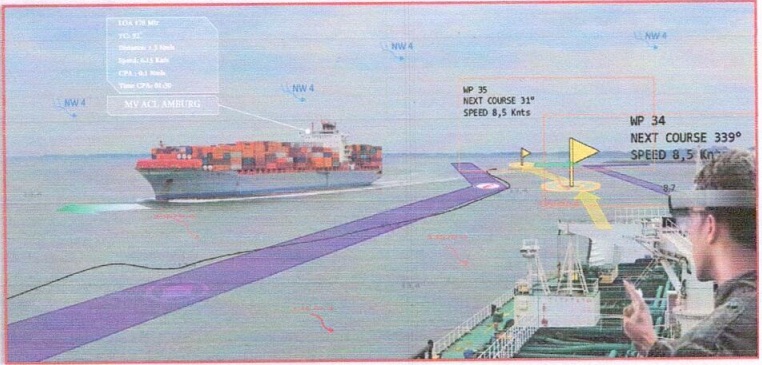
26. Afloat Applications / Navigational Augmentation. Imagine you are OOW (Officer of Watch) of your ship which has been equipped with an AR system in the bridge. Now we have seen videos of AR wherein a certain data is displayed along with the selected feature of the image/ video on the display. This can be in the field of navigation and a plethora of potential and unexplored aspects.
- In navigational applications, this data can be in the form of course, speed, CPA (Closest Point of Approach), TCPA (Time to CPA) and other similar features of the ARPA (Automatic Radar Plotting Aids) of COTS radars. The only difference here is that correlation between visual and navigational data is being undertaken in real time and moreover on a single video display. Other information which could be interfaced on this display include data about vessel's surroundings, potential hazards like storms, close quarter situations with other vessels or a ship wreck that would be invisible to the human eye. Now this has some extensive ramifications on the well known OODA (Observe Orient Decide Act) cycle, the most important framework in which the OOW has to act to successfully navigate through a IRPCS (International Rules for Prevention of Collision at Sea) situation or a navigational hazard situation. Needless to say, this will greatly reduce the OODA cycle, thus enabling quicker response based on accurate decisions.
- This upcoming technology will be deployed in bridge systems of the future, but the medium and where to display the information are not finally decided. eAR is one of these navigation software designed by an Italian company called EasyMarine that integrates hydro graphic chart data to the surrounding space vision using augmented reality and has been exploited by shipping companies since 2016. A state wherein this technology uses not just only hydrographic information but also ARPA/ Visual/ Radar inputs is just around the corner. A snapshot of the current AR enabled bridge window is depicted below.
- Security Augmentation. Needless to say that although the above example depicts a tool for safe navigation, the AR has potential to revolutionise the vessels for efficient maritime security operations also by enabling better surveillance by drones/ MR aircrafts/ satellite reconnaissance to promote peace, security and stability in the IOR. In fact, the recent widespread usage of UAVs (Unmanned Aerial Vehicles) in defence and SAR roles has led to the potential of AR applications that increase the user perception of the real world by fusing that perception with information captured from other platforms/ other UAVs/ operations centre
27. Ashore Applications. The ashore also offers prospective fields for development and deployment of AR based applications. AR can be used to effectively manage ashore resources. At present, the practice of facility management in the oil industry relies on 2-D drawings and operation manuals. A considerable time and effort is spent on querying, analysis and communication of information from these drawings. Such efforts if undertaken by inexperienced personnel can cause errors and misunderstandings between stakeholders. An integrated framework and prototype based on AR will support facility management activities for petroleum refineries. As AR matures and becomes more widely adopted within the maritime industry, new avenues of research will open to solve emerging issues. The real world application of this technology will continue to uncover new needs as time progresses.
28. Implications — Augmented Reality and Maritime Security in IOR. The AR is a great tool for interfacing and fusing of information from multiple domains/ levels/ platforms relevant for the security of IOR. As mentioned above, the ashore and afloat applications can together combine to help achieve security in the IOR. Details of the same are enumerated in succeeding paragraphs.
- Security for IOR — Real Time Fusing of Information. The AR enabled displays on ships/ aircrafts/ submarines/ UAVs etc will allow real time fusing of information onboard. The OODA cycle will be drastically reduced as the correlation will happen almost simultaneously in view of the fused information. The real benefits of this technology will be accrued when the IOR states collaborate towards sharing of this fused information (may be classified into different levels based on comfort levels of the nation). The security in the Indian Ocean region will be augmented by this technology and is very much possible.
- Additionally, this is relevant for interfacing fused information only and hence the participating nations could choose the extent of the sharing of their respective fused information. The capabilities of this technology against smuggling, piracy, Illegal Unregulated and Unreported Fishing (IUU) and ensuring adherence to international waters iaw UNCLOS etc are limitless.
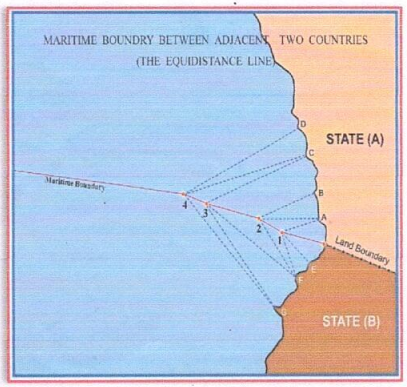
- Resolution of Disputed Waters. Imagine if the 2D information in the adjacent figure is depicted as 3D overlay to the real time visual information available. The most important and positive implication of this technology will be towards resolution of international disputes over territorial water claims. The technology can be guided by regulations of UNCLOS which will then allow the disputing nations to appreciate the laws clearly and hence result in a better STATE (B) understanding of the situation by units deployed at patrolling the marmite boundaries. А thorough understanding of UNCLOS regulations augmented by AR technology will go a long way in this regard.
- Maintenance of Freedom of Navigation. The importance of maintaining freedom of navigation and strengthening the international legal regime at sea, particularly the United Nations Conventions on the Law of the Sea (UNCLOS) remains paramount for all states in IOR. It is considered sensible for all IOR states to progress work in this technology which will enable navies to visually correlate the respective maritime zones of interest of each other and will prevent misunderstanding or misinterpretation of the laws. The algorithm/architecture used for the AR in this field can be encrypted using another upcoming technology Block chain (as brought out above) for ensuring the AR interface is not tinkered with by any state/ entity for harmful purposes.
- Ship Design and Architecture. Further, as AR matures the ships design and fitment of equipment process will undergo massive transformations which will affect designs of both warships and merchant ships symmetrically. IOR states involved in shipbuilding industry will benefit greatly from this technology and a better economy will be achieved. Indirectly, this technology will be a major contributor to effect outlasting peace in the IOR in view of enhanced and more stable economies in the IOR.
Drones / Remotely Piloted Vehicles (RPVs)
29. Introduction. Drones or RPVs as they are called in the military parlance have made a big footprint already in almost every aspect of our lives. The technology has found widespread usage - home delivery of spares, overhead video coverage of important events etc. The reach and versatility of this technology has enabled varied and widespread applications in various fields. Attributes of this technology in the maritime domain are enumerated in succeeding paragraphs:-
- Reach
- Mobility
- Access
- Sustenance from Ships
- Flexibility in operations
- Versatility in roles
30. Applications of Drone Technology. Applications of drone technology are growing exponentially and the trend is going to clearly continue. The global market is worth $2 billion, and this number is expected to skyrocket to $127 billion in 2020. The Federal Aviation Administration of (FAA) of the US predicts that commercial drones will jump from the 80,000 registered units in Aug 17 to more than 420,000 units by 2021. There are certification programmes sprouting up all around the country where one can become a certified drone operator." Some of these applications are as enumerated below.
-
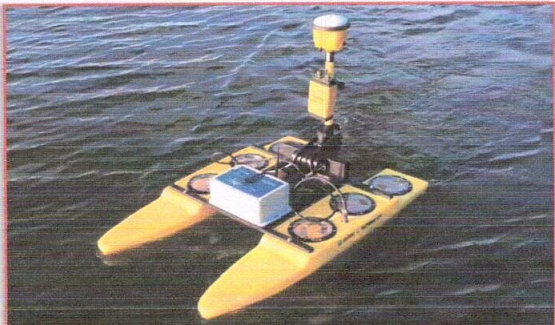
Surveillance Services. Methods are being developed for using flying/ submerged autonomous crafts or drones to assist on surveillance, hydrographic and terrain surveys of coastal areas and outlying littoral regions. The drones can be used to survey remote and difficult to reach areas while the surveyor is positioned on a ship/ offshore structure.
Drone / RPV for Maritime Surveillance
 Source: Essay, INCARNATE INJUN, IONS Essay Competition 2019
 - Further, drones are being used increasingly by pipeline companies to help with everything from surveying and mapping during the route planning process through to monitoring and surveillance tasks. In addition, the military applications are already well known. Consider a scenario, the anti piracy task force in a joint collaboration of the IOR states are deployed off the eastern coast of Africa. Based on intelligence inputs, the formation deploys a UAV/ RPV/ Drone for search and detection of pirate boats. The UAVs are equipped with classification tools like ISAR, AR equipped sensors which allow the ship borne operator to assimilate the situation and correctly locate and identify the craft. The same scenario can be imagined with equal amount of success as an analogy for maritime terrorism. The drone technology has been existent for more than a decade and has already proved its success for coastal surveillance in multiple IOR nations. Although, drone technologies exists for commercial usage, considerable scope exists as far as the process of hardening them is relevant towards maritime applications while at the same time to be able to successfully withstand the harsh marine environment.
-
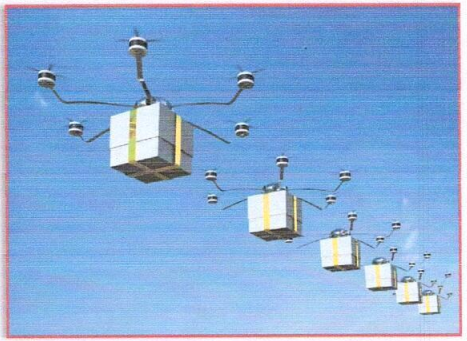
Delivery Services / Emergency Relief. In light of the recent geopolitical developments in the IOR, it is considered prudent by the IOR states to have the capability of undertaking NEO (Non Combatant Evacuation Operations) and HADR (Humanitarian Assistance and Disaster Relief) operations. The drones are appreciated to be a suitable platform for delivery of parcels/spares/critical cargo/emergency relief materials to ships/warships involved in the above mentioned operations. These attributes enable the drones to reach hostile zones/areas and deliver the gears/ration/resources as required without any casualties/risk to own forces. Moreover, their usage drastically reduces the risk of non battle casualties in any operation. Dozens of drones were used for assessment of damage and searching for people in need of rescue as a response to hurricanes Harvey (2017), Maria (2014) and Irma (2017) which unleashed their fury in the American continent from Atlantic Sea in the last few years.
Drone Delivery for Humanitarian / Emergency Relief
 Source: Essay, INCARNATE INJUN, IONS Essay Competition 2019
 - Risk Assessment / Perimeter Control. Drones can be used to find gaps and vulnerabilities that wouldn't normally be seen, owing to the bird's eye view of a wide area. This can alter the thought process which will guide one on the dynamics for positioning of the security countermeasures. The drones can be deployed over and around critical maritime operations hubs of the IOR states, important international business trade centres for facilitating and augmenting security. Another subset of this application could be in the role of perimeter control of vital assets/ vital points of IOR nations. They can also be equipped with thermal imaging cameras which will change the dynamics of night operations altogether.
31. Challenges and Implications for IOR — Drone Technology. As brought out above, the drone technology is versatile and capable of applications in various aspects of maritime security in IOR. The scope of applications in enforcing security and peace in the 1OR is left to anyone's imagination. It is pertinent to state -drone technology will enable security for all states in the IOR in the coming days. Some areas that need to be addressed prior their application by IOR states are as enumerated below:-
- Airspace Conundrum Coordination. UNCLOS states the airspace in the maritime domain over open or high seas is a free area. However, the arrival of drones in this domain will require coordination to avoid mutual interference. Additionally, the biggest safety threat from drones is the potential collisions with airplanes. The risk posed by a bird strike now stands miniscule as compared to a drone strike as the hardened material and high operating velocity of the drones can take down a passenger plane. Most at risk aircrafts are the ones that fly below 500 feet like ship borne helicopters, and fixed wing aircrafts during launch and recovery from aircraft carriers. However, mechanics of coordination of airspaces between joint multilateral forces at sea will have to be further analysed and promulgated to enable a cohesiveness and collaborative spirit in the IOR.
- Radio Interference. The possibility of RF interference between two or more forces involved in the joint operations of RPVs in close vicinity will have to be taken into consideration so as to prevent unnecessary interference in the EM spectrum. Frequency interference can result in loss of control or a system failure.I Further, incidents have been reported in the past, where radio interference resulted in injuries and hence is a challenge prior to their application. This will involve close coordination between the IOR states under the ITU regulations of the UN. Although this is a challenge, but it is achievable and the gains accrued by the resolution of interference issues will far outweigh the trials and tribulations which will be encountered in the way.
- Data Theft. This is considered a huge issue, especially with the news that drone manufacturers may be sending sensitive data from the drones in one country to an adversary. With the sheer huge numbers in active usage, and the numbers expected to go up further, the likelihood of all that information being sent to a rival country/ nation is very much possible. This also is supported by the fact that all drones are vulnerable to hackers and security vulnerabilities as any other IoT (Internet of Things) device is, whether they are in flight or not.
Deep Mining Technology
32. Introduction. Rising demand for minerals and metals including for use in above mentioned technology sectors has led to resurgence of interest in exploration of mineral resources located on the seabed. They are classified into - seafloor massive (polymetallic) sulphides around hydrothermal vents, cobalt rich crusts (CRCs) on the flanks of seamounts or fields of manganese (polymetallic) nodules also called as MN on the abyssal plains. These resources are соlocated with unique and untouched marine habitats and structures also known as Vulnerable Marine Ecosystems (VMES). Additionally, the extraction of methane gas from gas hydrates on continental slopes is also Mining Support Vessel (MSV) Riser & Lifting System (RALS) Seafloor Mining Tool (SMT) on the rise. The technology used for deep sea mining is different for different resources. However, all these technologies follow the standard procedure of violating the sea floor, the water above and a massive reshuffling of habitats. This will also definitely create massive swirls of debris and sediments.
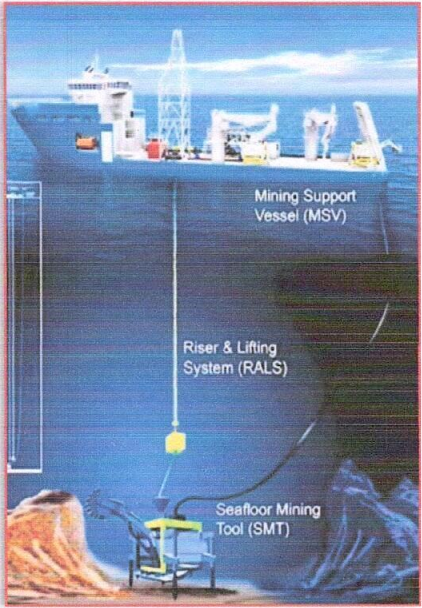
33. Mining Technology and Processes. Development of deep sea mining technology is underway even though the greater depths involved in this process present additional challenge. All proposed seabed mining operations are based on a similar concept of using a seabed resource collector, a lifting system and support vessels involved in offshore processing and transporting the ore. Most technologies envisage the use of ROVs (Remotely Operated Vehicles) to extract the deposits from seabed using mechanical or pressurized water drills. Consequently, a plume of sediments rises up extending miles across the excavation zone which also release and disturb toxic elements.
34. Extraction of Gas Hydrates. Gas Hydrates have attracted attention commercially as a potential future energy resource. The potential amount of natural gas in global reserves of gas hydrates are estimated to be around 1.5 x 10¹⁶ m3 (at sea level) but more precise estimates are not available because of the lack of field data research. Countries like Japan, China, India and the United States are investigating the resource potential of gas hydrates. Japan claims to be the first country to successfully extract gas from the methane hydrate.
35. Environmental Risk in Methane Hydrate Extraction. The extraction of Methane hydrates from reserves carries considerable environmental risk. The greatest impact would be accidental leakage of methane during the dissociation process. Now this Methane gas is 28 times more potent as a global warming potential gas (according to its assigned global warming potential over 100 years). Other possible impacts include subsidence of seafloor/ landslides resulting in even greater instability n remaining hydrate deposits. Further, artificial excavation activity using floodlights which leads to increased water temperatures at seabed level could also destabilize and melt the hydrates. This could eventually result in a catastrophic and huge release of Methane into the sea or atmosphere adding to ocean acidification and global warming.
36. International Seabed Authority. Since its inception in 1982, the International Seabed Authority (ISA), the nodal authority for regulation of human activities on the deep sea floor beyond continental shelfs, has issued 27 contracts for mineral exploration, a total area of more than 1.4 million sq km.x To compare with past years - 17 contracts were active in 2013 and 08 were active in 2010. Contractors who have been granted exploration rights are entitled to explore for minerals over a designated area of the seabed. The first commercial enterprise, expected to target mineral rich sulphides in deep waters (1500-2000 m) on the continental shelf of Papua New Guinea is scheduled to begin early in 2019. However, in view of the danger to marine ecosystems, most of the participating contractors/ sponsor states have opted for further analysis and await results of studies on environment by this technology prior progressing further. It is a known fact that only a fraction of the deep sea has been scientifically studied and concerns related to deep sea mining are legitimate and valid. The ISA recognises mining as a threat to the fragile marine ecology, but is not ready with an environmental safeguard at present. The conditions and rules for mining have not been developed till now. In fact, most explorations are taking place without a firm and sound environmental study.
37. Implications of Deep Sea Mining in IOR.
- Effect on Fragile Ecosystem. In the present scenario, the deep sea resources are lucrative apples in the proverbial Eden Garden of Marine Environment. The deep sea mining technology is progressing at a rapid pace but at a high cost to the fragile marine ecosystem attached with the resources. It must be understood that some of these creatures in the deep sea have ever seen artificial or natural light and the disturbance to them whilst undertaking even deep sea mining experiments have proven as a catastrophic event on marine environment. The deep ocean where mining is proposed constitutes the largest and least understood biological habitat on Earth. The region is characterized by darkness, extreme pressure, cold temperatures, high bio diversity (perhaps millions of species and yet to be identified), slow growth/ reproductive rates and high sensitivity to disturbance (low resilience).
- Conflicts with Fishing / Pharmaceutical Industry. Effects of deep sea mining on Fishing and Pharmaceutical industries are as enumerated in succeeding paragraphs.
- Conflict with Fishing Industry. On an average, the fishing industry is going deeper every decade to explore the bountiful fishing resources in the deep sea. The conflict with the fishing industry is on the verge of Namibia which is likely to affect the economy of this coastal state. An exclusion zone of 23 x 9 km has been proposed in Namibian waters in relation to exploitation of seabed phosphate deposits. This would impact the commercial fishing grounds of hake, horse mackerel and monkfish. It is also reported that fishing activities will cease in the immediate mining area and the exclusion zone due to habitat removal and increased levels of maritime traffic. In another exampler, fishing companies were active opponents to a proposal for iron and sand mining off New Zealand's west coast.
- Conflict with Pharmaceutical Industries. The deep sea is also the largest reservoir of genetic resources and many companies already hold patents for pharmaceuticals discovered there. For example, enzymes from deep sea bacteria have been used in the development of commercial skin protection products. In 2010 the xii market for marine genetic resources touched multiples of billion dollars. With the advent of deep sea mining technologies, the conflict between the two powerful industries is a very distinct possibility resulting in loss of revenue and unstable economies.
-
Methane Hydrate reserves in IOR. In July 2016, a partnership comprising the US Geological Survey, the government of India and Government of Japan discovered a deposit of natural gas hydrate in the Bay of Bengal. As brought out above, since there are considerable risks in Methane gas extraction, the environment and subsequently the coastal IOR states are at prime risk of submergence/flooding because of global warming. Now this is a security threat for IOR — what may seem just an environmental disaster will transform into a geopolitical situation in a flash because of the huge amount of population inhabiting the coastal belts of IOR states. The situation has a potential to become a catastrophic event wherein geopolitical changes will lead to anarchy, chaos and widespread confusion. This is where HADR and NEO operations will come into effect, a situation for which all IOR navies must be prepared for.
Methane Myopia — Global Distribution of Methane Hydrate Deposits on Ocean Floor
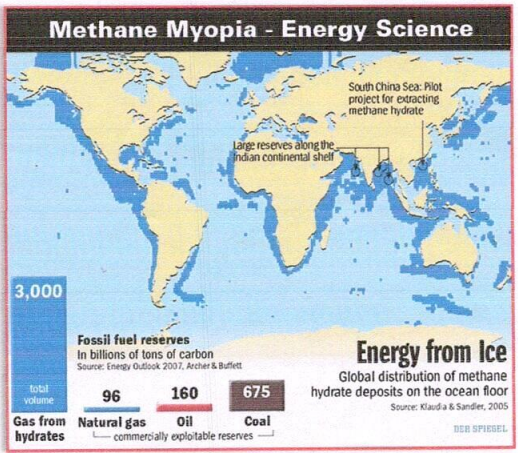 Source: Klaudia & Sandler, 2005 / DER SPIEGEL
 - Possibilities of International Disputes. Legal cases could be filed, for example, a sediment plume which was created due to the deep sea mining process crosses boundary and causes harm to the marine environment of a coastal state or to the area outside an allocated site to the contractor. Disputes in the IOR could arise if "Surface Exclusion Zones" around seabed mining operations reduce access to fishing areas and/or change shipping in the navigational route in the area.
- Legal Framework. Discussions are underway to develop the legal framework to regulate exploitation including issues of environmental protection, accountability, interactions across international and national boundaries. The uncertainties surrounding deep sea ecology and ecological responses to mining related activities mean that environmental management strategies would need to be tailored to incorporate natural, temporal and spatial diversity of the deep sea ecosystems.
Conclusion
38. Homo sapiens have been a progressive and innovative species; these attributes have resulted in an enhanced state of survivability and dominance on Earth. In order to continue doing so, the maintenance of peace and stability is an important clause which must be achieved at all costs irrespective ofthe challenges. In the perspective of IOR, its importance is even more significant in the future especially in light of the upcoming maritime technologies all of which has its pros and cons resulting in both benefits and vulnerabilities.
39. Although, a maritime domain, IOR is influenced by a spectrum of events both on land and at sea. Reciprocal of the same situation is also applicable. Further, the technological advancements as brought out above have and will continue to play a major role in the security of Indian Ocean.
40. The implications of these technologies as brought out in this paper are far reaching and exponential in proportions. And hence, it would be wise and practical for the IOR countries to proactively address these technologies and incorporate the same in their national strategic policies. A precursor and critically envisaged condition for establishment of everlasting peace and security in the IOR is to establish joint collaborations between countries including MNFs present in IOR which will exploit these technologies and address the shortcomings for a better and regulated state of affairs in the IOR.
